
Spin a wheel numbered 0 to 100. It lands on 65. Now, a question — is the percentage of United Nations members that are African countries higher or lower than 65? And what do you reckon the actual percentage is?
Two fellas named Amos Tversky and Daniel Kahneman reported an experiment like this in 1974 (being old doesn't make it wrong!). Different groups saw different numbers, but the wheel was rigged behind the scenes to stop on either 10 or 65. For those who saw 10, the median estimate was 25 percent. For those who saw 65, it was 45 percent.
A number with nothing useful to say about the question had pulled their answers towards itself.
That pull is called "anchoring", and you don't need a rigged wheel to get caught in it.
How it works
One explanation is that an anchor changes what your mind goes looking for. Once you've considered "65" you start searching for reasons it could be right. Those reasons are now easy to reach; the reasons against are not. Psychologists call this selective accessibility.
An anchor is not a starting point you leave behind. It's a centre of gravity that you orbit.
On a farm, the thing that gets lodged in your head can be a whole picture of how the season is going to unfold. Once it's there, it can shape how you read everything that follows.
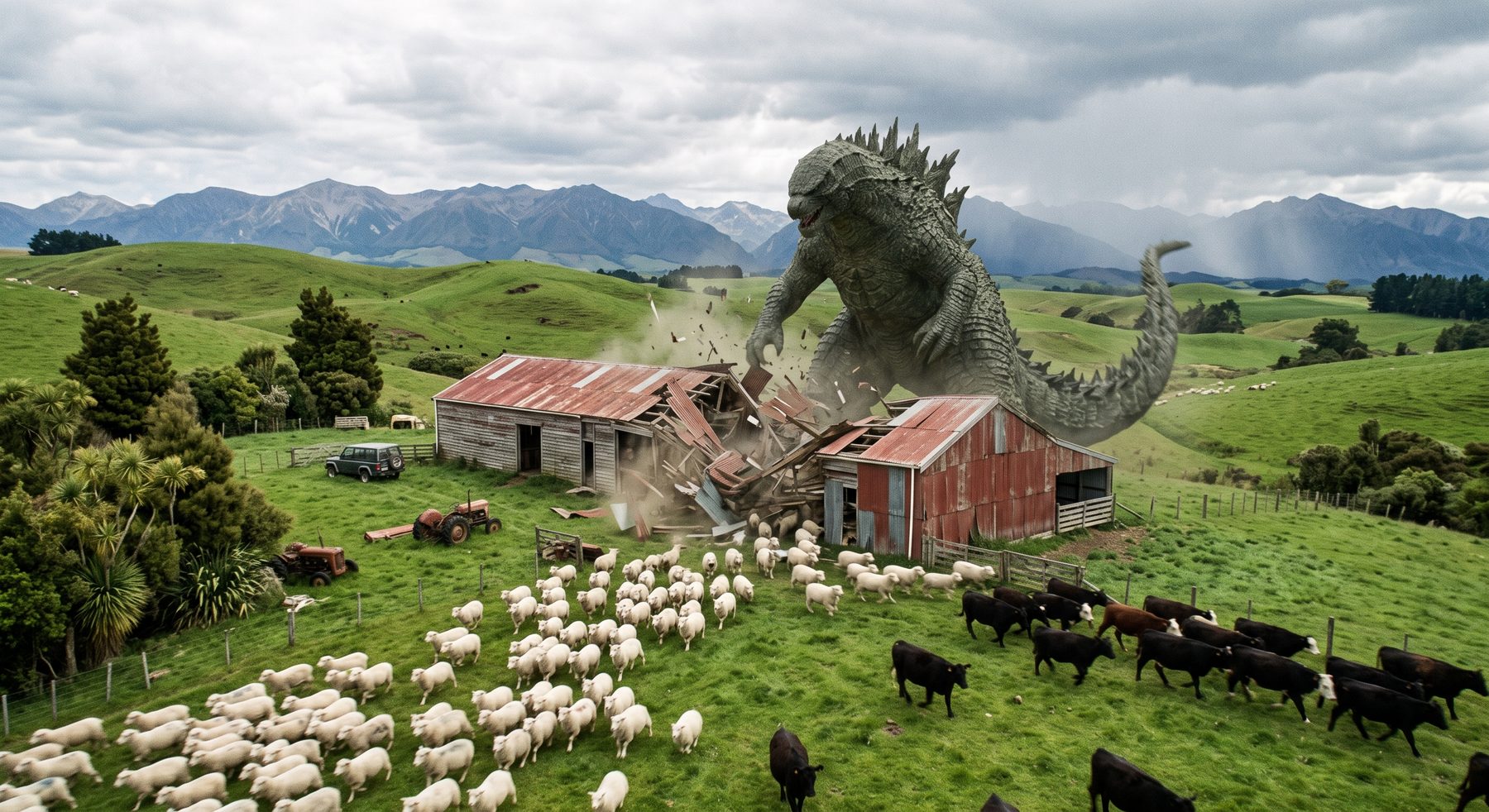
"Godzilla"
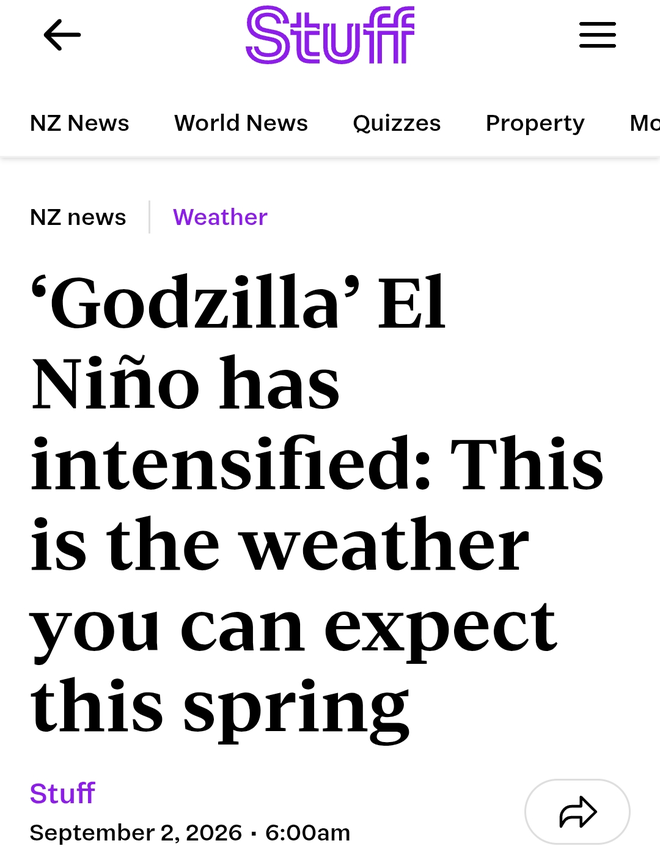
You cannot open the internet at the moment in NZ without seeing an El Niño reference. Maybe that is partly because of the work we do, but "Godzilla" is quite a name to scroll past. Coverage started back in autumn. Worst since 1997. Prepare now!
It arrives with a picture already attached. A destructive monster. Cracked ground. Empty dams. Something you would really rather avoid.
There is useful information behind the coverage. A seasonal forecast should influence a farming plan. Earth Sciences NZ (formerly NIWA) also makes the distinction that "Godzilla" isn't a scientific classification, and the strength of an El Niño doesn't always correspond to the severity of its effects here.
But the monster is an easier anchor to grab hold of than a nuanced scientific explanation.
Take a farmer on the east coast planning to carry 200 R1 bulls through summer. For this example, covers are reasonable and soil moisture is okay. There's no immediate feed pinch. There is, however, a forecast that deserves attention.
Somewhere along the way, a prolonged dry period becomes the assumed ending to the story.
An unseasonably dry fortnight registers as "it's started". A wet week buys a little time — but the ending stays the same. Every observation is fitted into the drought story.
The question has quietly changed from "what is happening?" to "how far along are we?"
From inside that question, 100 bulls going at the start of spring looks like prudence.
It might be. Selling early could be a very good decision. But has that farmer compared carrying all 200, selling 50, or selling 100? Looked at the feed position under different growth assumptions? Considered what waiting would cost, and how long the option to sell is likely to stay open?
Or did 100 bulls simply become the number that felt right once Godzilla entered the chat?
That's what anchoring does. It doesn't make anyone do something absurd. It moves the point at which a sensible-looking action feels justified.
Anchors aweigh
Knowing about anchoring doesn't automatically loosen its grip. Two practical habits can help us question the starting story.
The first is to deliberately argue the other case. Researchers call it "consider the opposite": it forces the search your mind skipped, and experiments have found it can reduce anchoring.
For our farmer, that means giving a less severe summer a proper hearing. If pasture growth holds up better than expected, what would selling those bulls now cost? What evidence would make carrying more of them reasonable? And what evidence would make selling sooner worthwhile?
A wet September week won't settle what happens in January. But it can still change the starting feed position and the options available. The aim is to let new information filter into the plan and potentially change it.
The second technique is to set your reference points before you are in the thick of it. Define your lines in the sand, looking at the levers you have around sales, purchases, and weaning dates. Work through what happens to the feed position if pasture growth is reasonable, poor, or truly terrible. Decide what would prompt action, how much lead time you'd need, and when you'll review it.
Record the reasons as well as the trigger. Otherwise, a line in the sand can become just another number you keep following after the assumptions behind it have changed.
The climate outlook still gets a vote
It may deserve a substantial one. It can justify a bigger feed buffer, fewer purchases, or an earlier sale. Put that risk into the scenarios and see what it does to the choices.
The wheel spinning 65 or 10 had no useful information behind it. Climate outlooks draw on observations, modelling, and scientific expertise. The challenge is keeping the new information connected to your decision as conditions, prices, and options change.
You may still sell the 100 bulls. You'll have a clearer account of why, what risk you're buying down, and what would make you change the plan.
Field notes is written while building farmBI. If you'd argue with any of this, I'd like to hear it — that's most of what the pilot is for.